Howth Locals
Howth is one of the best places near Dublin to see wildlife, with over 140 bird species recorded. Its cliffs hold kittiwakes, guillemots, razorbills, fulmars and a breeding pair of peregrine falcons, while gannets and puffins nest on Ireland’s Eye. Stonechats, skylarks and linnets live in the gorse and heather. Kestrels and buzzards hunt overhead. In the water, you may spot harbour porpoises, common dolphins and curious grey seals. Old Irish Goats graze the slopes above, all within the Dublin Bay UNESCO Biosphere Reserve. Please stay on the paths, keep dogs on a lead and give nesting birds space.
Goats Return to Howth
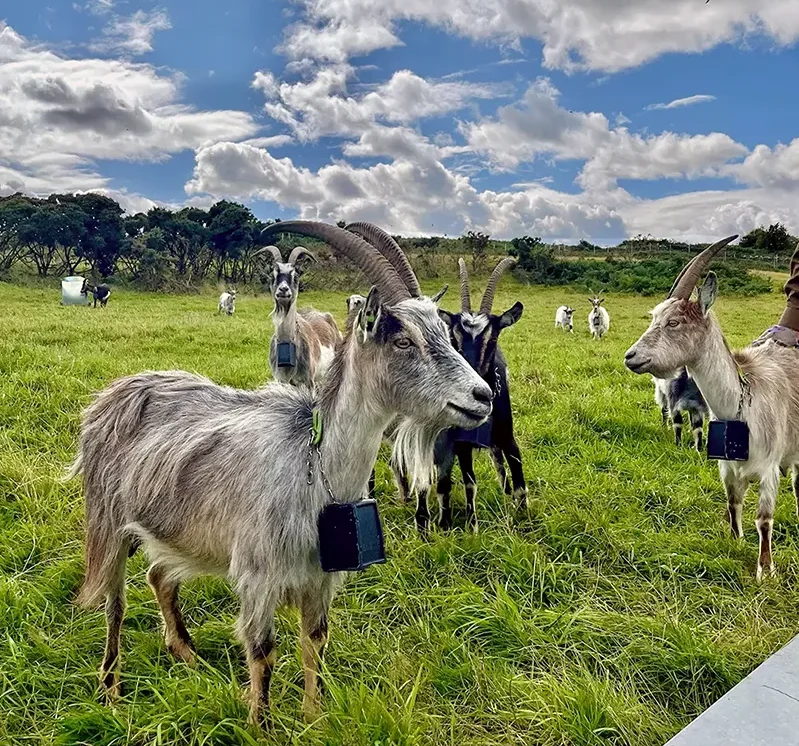
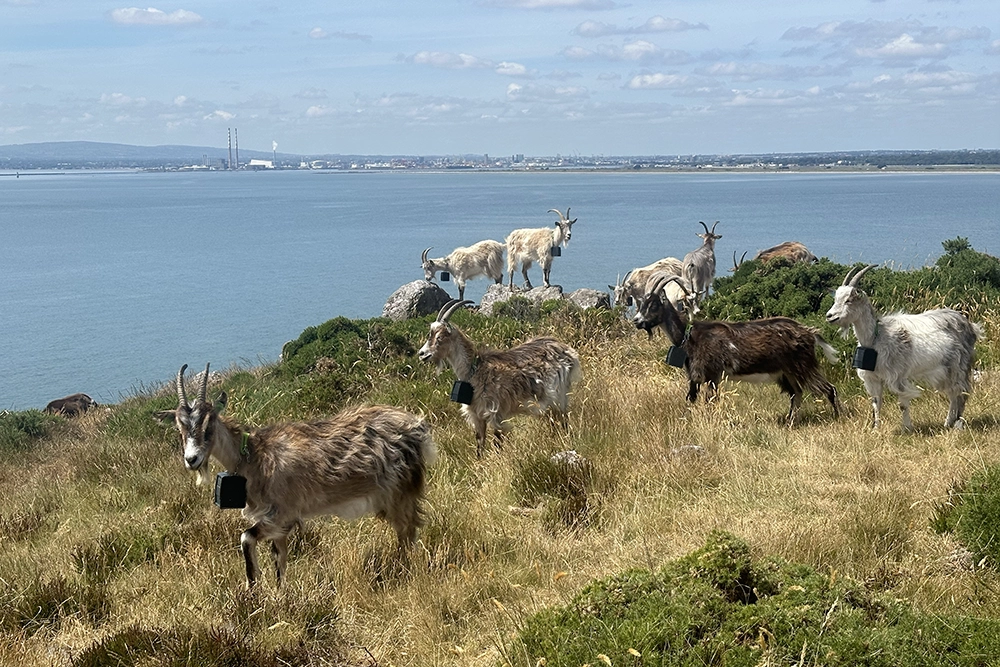
In 2021, a herd of 25 Old Irish Goats returned to Howth Head after nearly a century. The rare breed, from the national herd in Mulranny, Co. Mayo, was brought in through a partnership between Fingal County Council and the Old Irish Goat Society.
Until the 1940s, Howth Head was traditionally grazed by livestock, but as grazing declined, gorse spread, wildfires became more frequent, and the heathland declined. The goats were brought back to browse the gorse, reduce the fire risk to nearby homes, and restore the heathland’s biodiversity. They are cared for by a dedicated herder and are trialling GPS “no-fence” technology for the first time in Ireland. They also help save a critically endangered breed. On our guided walks, you may spot them along the trails. Keep your distance, keep dogs on a lead, and please don’t feed them.
‘Howth on Back From The Brink’ Documentary
Watch Derek Mooney as he visits the herd in Episode 2 of ‘Howth on Back From The Brink’ on RTÉ Player. The series centres on conservation efforts to manage wildfire risks and protect the local ecosystem on Howth Head.
Highland Cattle in Howth
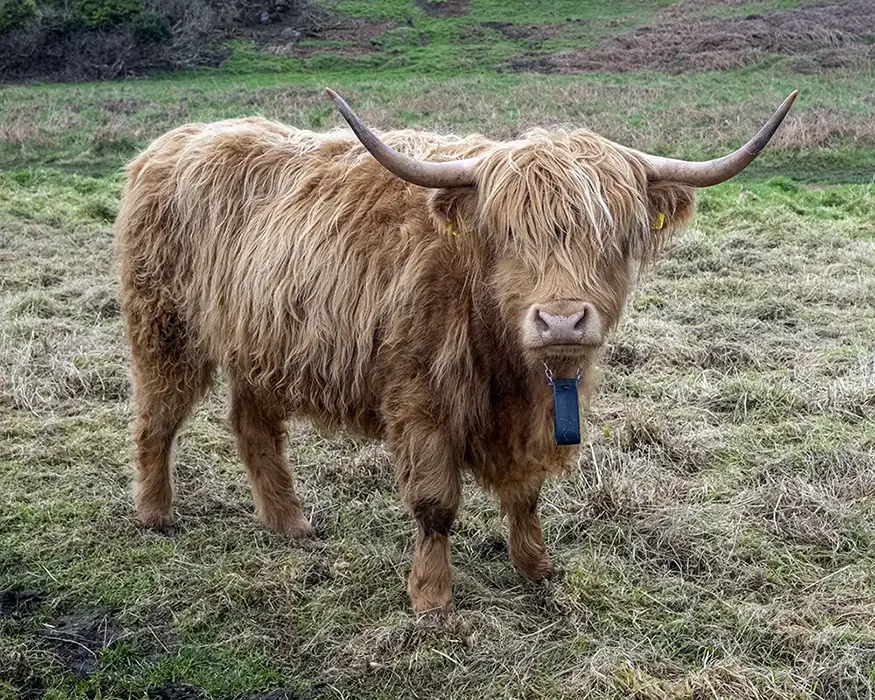
Fingal County Council, in partnership with Glenasmole Farm, uses Highland cattle as part of local biodiversity and conservation grazing projects. These friendly creatures can be found in Howth.
Grazing trials near Carrickbrack Road and Howth Head involve Highland cattle and goats. This helps manage grassland reduces wildfire risks and clears heavy scrub and heathland.
Highland cows are also part of a targeted grazing project to manage gorse and growth along the cliffs. By clearing the overgrowth they help prevent summer wildfires and create space for local wildflowers.
If you see them wearing bulky collars, these are GPS trackers that act as “virtual fences”. They keep the herd in the right place without needing physical barriers that would damage the trail.
Seabirds
Why Seabirds Matter?
- Seabirds are indicator species: their health reflects the condition of fish stocks and marine ecosystems.
- Ireland’s Eye supports thousands of breeding pairs, making it vital at a national and EU level.
- The island provides safe nesting cliffs free from foxes and other mainland predators.
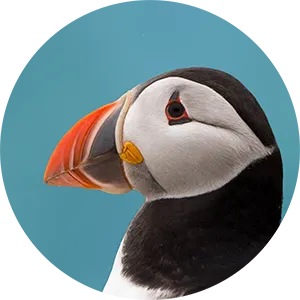
Puffin
Irish Name:
Puifín Scientific name:
Fratercula Arctica Bird Family:
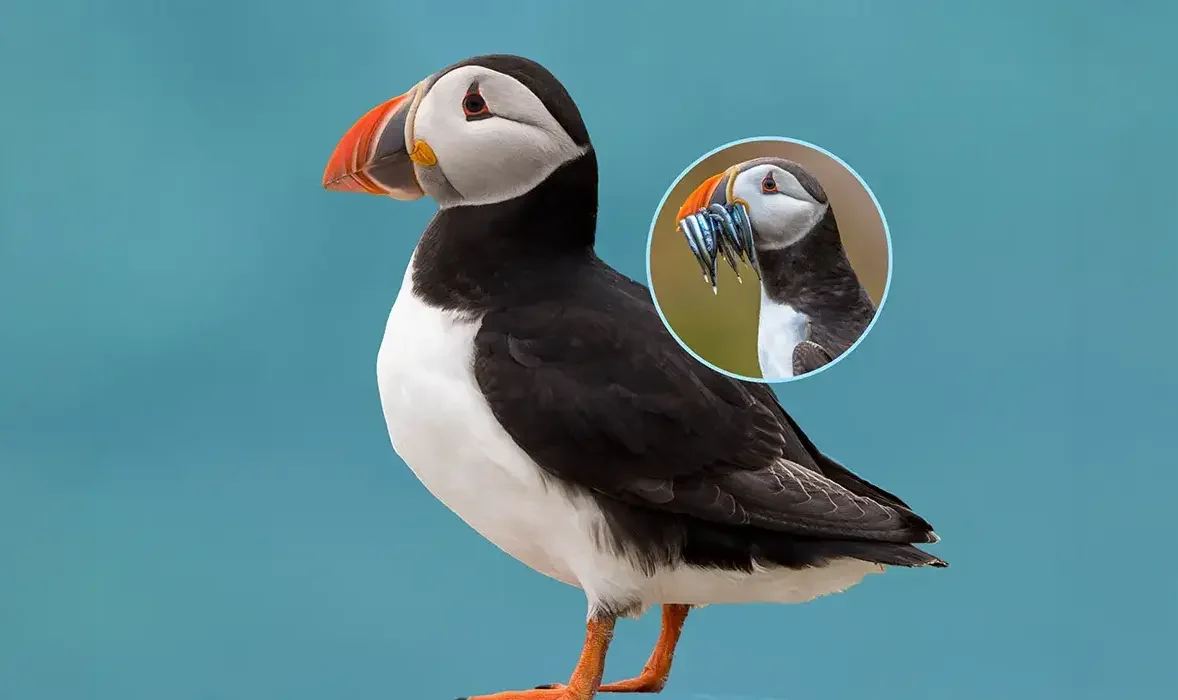
Auks Beautiful puffins are a regular summer visitor to the Ireland’s Eye cliffs, arriving from March to September. In Autumn they travel to the middle of the North Atlantic and then on to the Arctic Ocean for the winter. They stay on the open ocean, floating on the sea in large groups called rafts. These Irish puffins can clock up to 4,700km on long return flights across the Atlantic to breed off the Irish coastline every year.
- Puffins develop multi-coloured bills for mating season.
- They can flap their wings up to 400 times a minute.
- Their bills can grasp up to 12 fish at once.
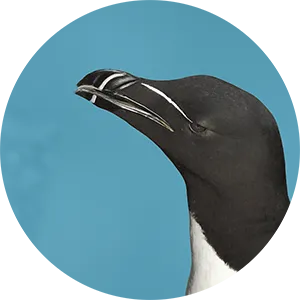
Razorbill
Irish Name:
Crosán Scientific name:
Alca Torda Bird Family:
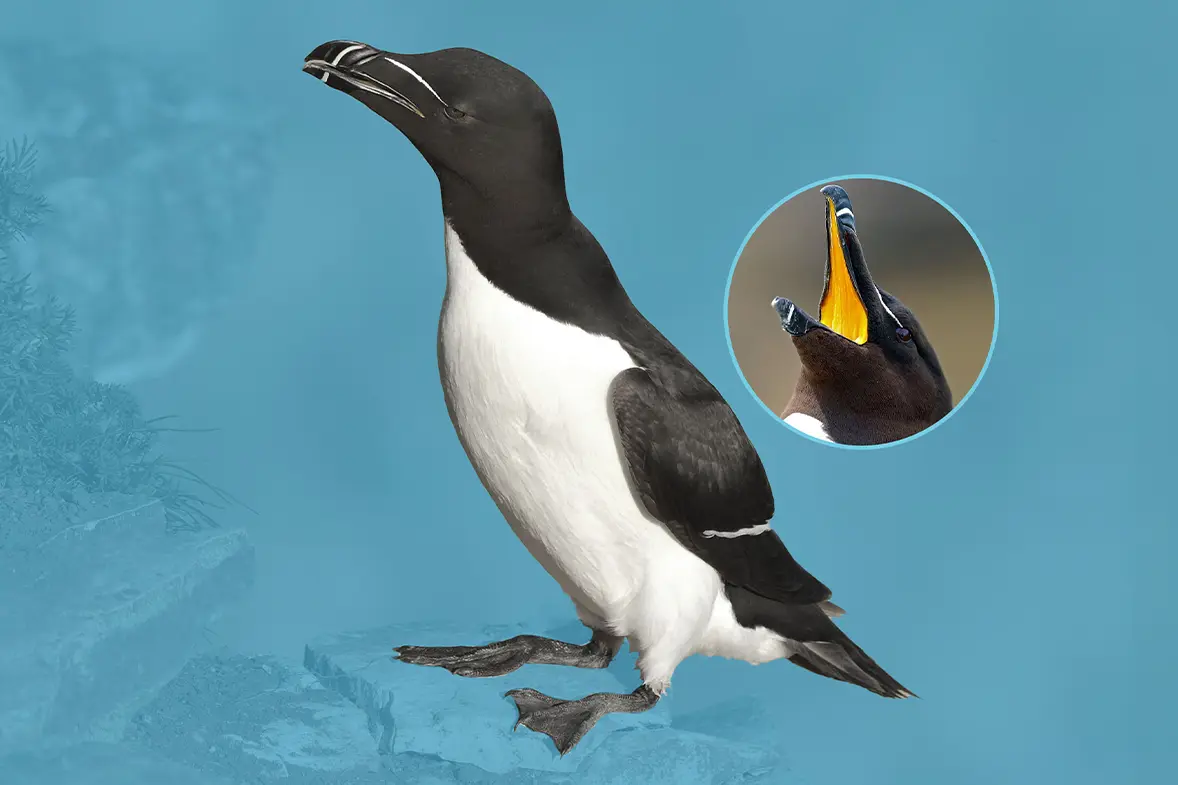
Auks A medium-sized auk, razorbills are black across their head and back, with a white underside throughout the summer months. Similar to the guillemot in size and shape, they can be distinguished by their stocky, wedge-shaped bill which sports a thin white stripe from top to bottom. These distinctive seabirds typically nest on narrow rocky ledges of coastal cliffs, where they lay a single egg during the breeding season. They are excellent divers.
- Razorbills are monogamous and mate for life.
- Amazing diving abilities, reaching depths of up to 140m.
- They are the only auks with distinctive yellow inside bill.
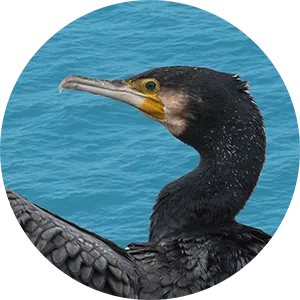
Cormorant
Irish Name:
Broigheall Scientific name:
Phalacrocorax Carbo Bird Family:
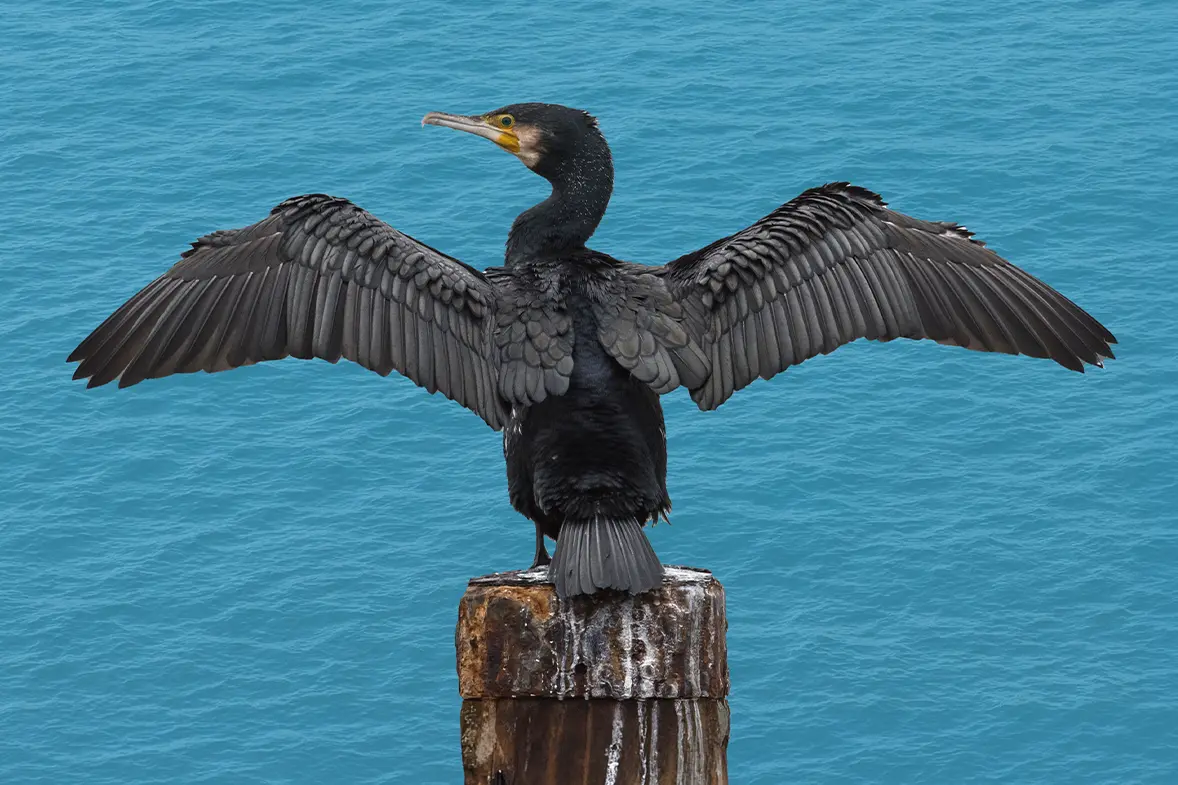
Cormorant Cormorants are expert fishers with unique diving abilities, consuming large quantities of fish and living in diverse environments. They are social birds, often gathering in large colonies for breeding and nesting. Easily confused with the shag, cormorants are larger in size and sport a bright white patch on their face and thigh during breeding season. They often stand on rocks with wings spread wide to dry their feathers after diving.
- Cormorants can dive up to 25 meters deep.
- They need to spread their wings to dry after diving.
- Wingspan of 145cm.
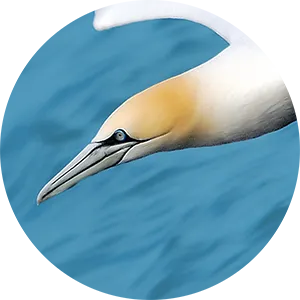
Gannet
Irish Name:
Gainead Scientific name:
Morus Bassana Bird Family:
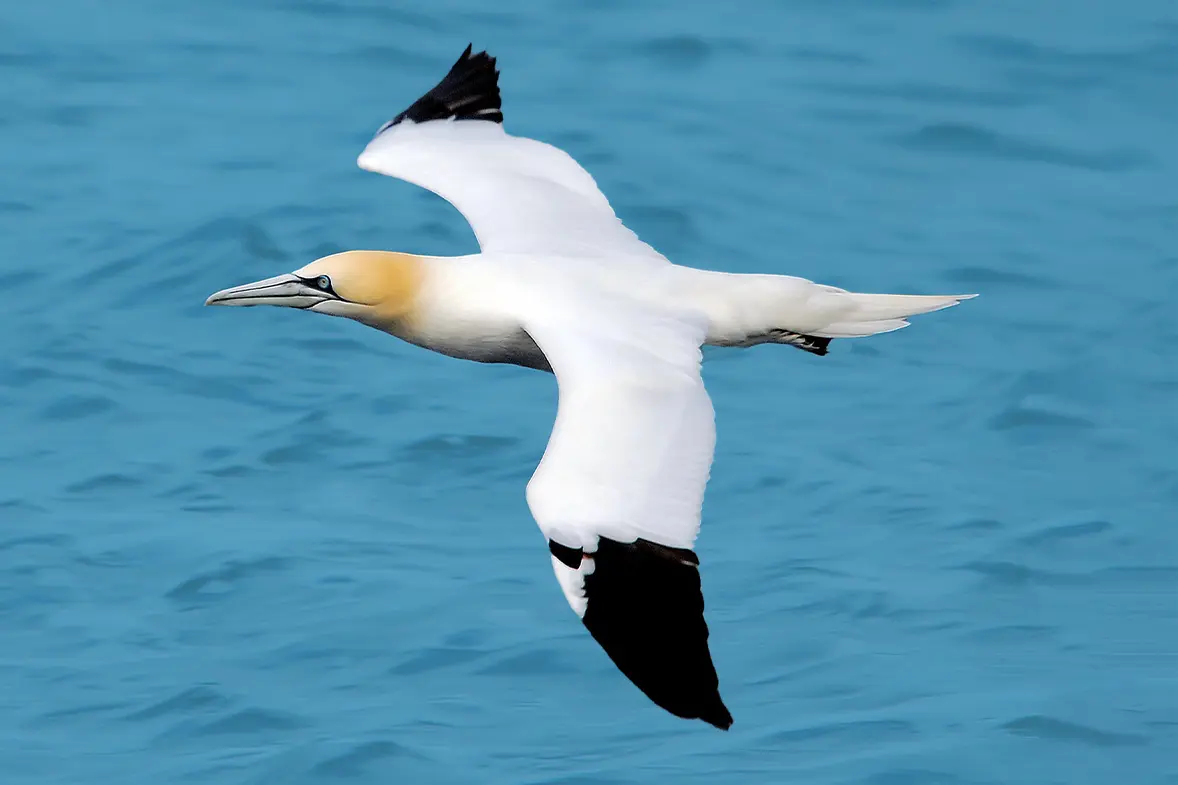
Gannet The Northern gannet is a striking seabird, easily identified by its brilliant white plumage, ink-black wingtips, and a soft yellow wash across its head. Their flight is a rhythmic dance, gracefully alternating between powerful flaps and elegant glides just above the swells. To feed, these masters of the air circle high above the waves before tucking their wings to plunge headfirst into the ocean, reaching breathtaking speeds of up to 97 km per hour.
- Gannets plunge-dive into the sea from up to 40 metre height.
- They hit the surface of the water at speeds of up to 97kph.
- You’ll likely smell a gannet colony before you see it.
Guillemot
Irish Name:
Foracha Scientific name:
Uria Aalge Bird Family:
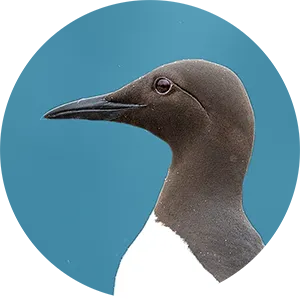
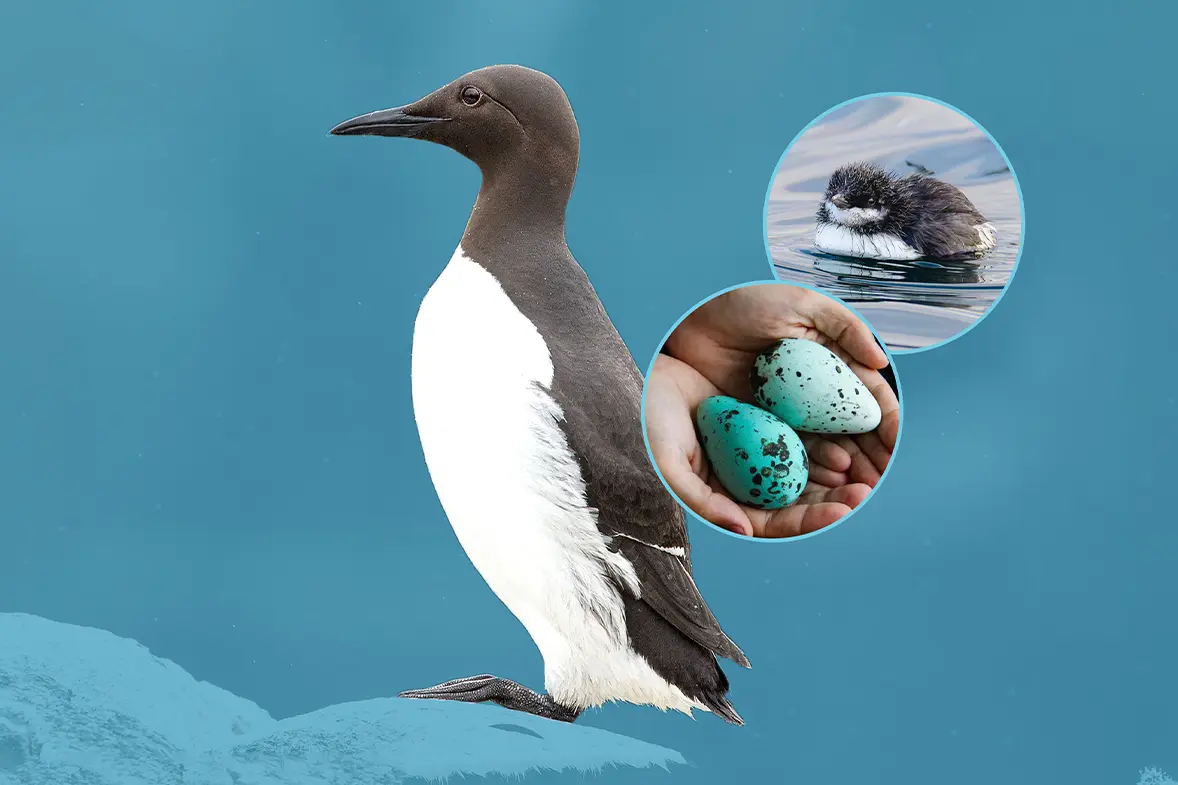
Auks The Guillemot is Ireland’s most abundant Auk. These resilient birds remain far out at sea for most of the year, returning to Irish shores only to breed. Their striking chocolate-brown upperparts contrast against snow-white bellies, creating a sleek, formal appearance. Crowded on narrow cliff ledges, they defend remarkably tiny territories, sometimes measuring just a few square centimetres, demonstrating an incredible adaptation to limited space.
- Weeks-old guillemot “jumplings” leap from cliffs into the sea.
- Guillemots are deep divers that feed on the bottom.
- Guillemots eggs are very large and beautiful.
Kittiwake
Irish Name:
Saidhbhéar Scientific name:
Rissa Tridactyla Bird Family:
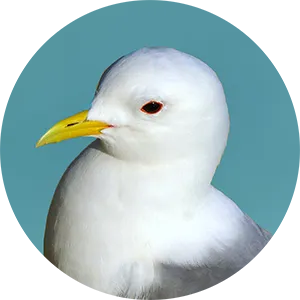
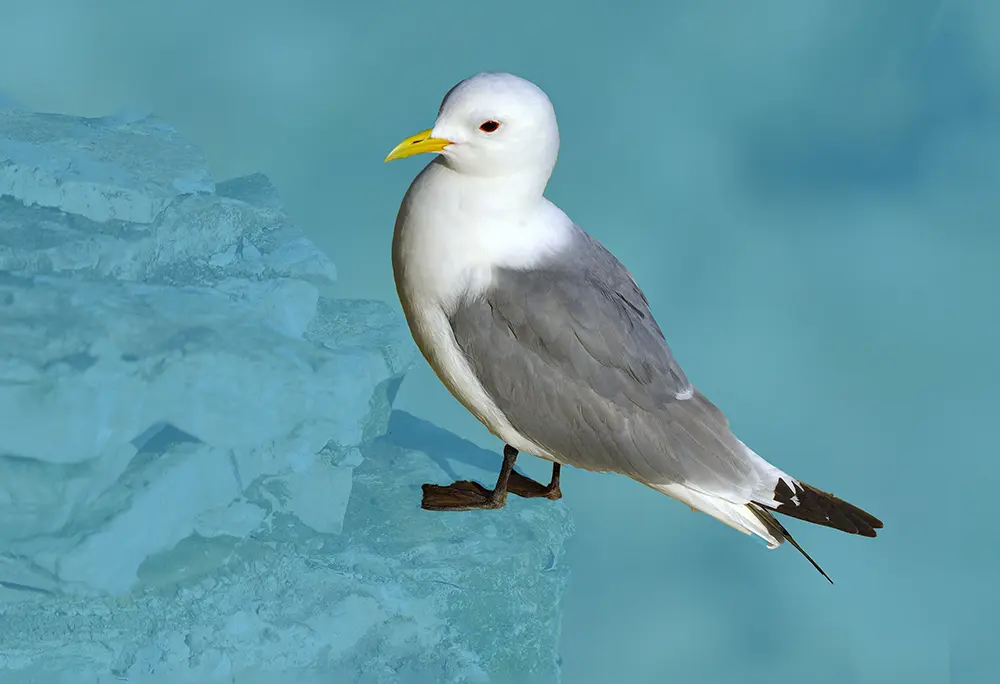
Gulls Kittiwakes are a summer visitor to steep coastal cliffs along all Irish coasts. Disperses to the open ocean in winter and less frequently seen. A small gull which is basically grey above and white below. Forms colonies, sometimes thousands strong, often with other seabirds. Noisy at colonies, giving a nasal call resembling its name. Can often be heard clearly over the sounds of other birds at seabird colonies.
- Kittiwakes live up to about 20 years old in the wild.
- They have black wingtips and short black legs and feet.
- They take their name from their shrill ‘kittee-wa-aaake’ call.
Marine Mammals & Sealife
Grey Seal
Irish Name:
Ron Mor Scientific name:
Halichoerus Grypus Group:
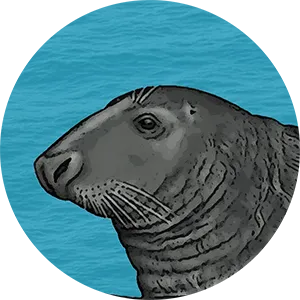
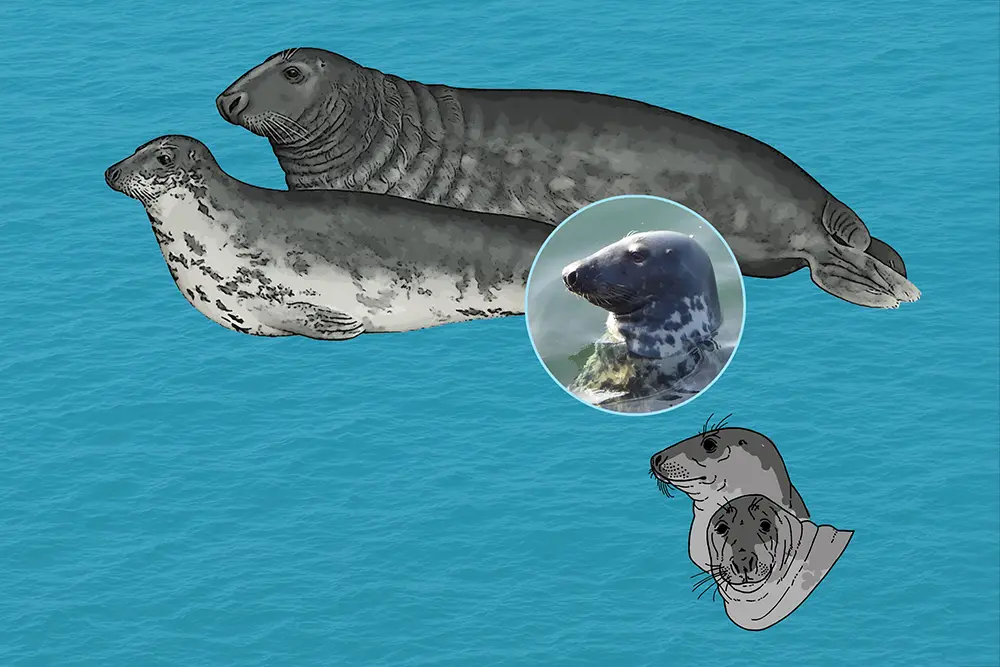
Mammal Grey seals are the larger of the two seal species found in Irish waters. Males known as bulls are larger and heavier than the female cows with mature bulls on average measuring up to 2.5 meters in length and weighing up to 300kg. Female adults will grow to 2 meters in body length and can weigh up to 180kg. These fascinating marine mammals are easily recognised by their distinctively long snouts and thick, warm blubber.
- Males have “Roman nose” and appear to have multiple chins.
- The grey seal pupping season is Autumn.
- Lifespan, 20-35 years females live the longest.
Common or Harbour Seal
Irish Name:
Ron Breacach Scientific name:
Phoca Vitulina Group:
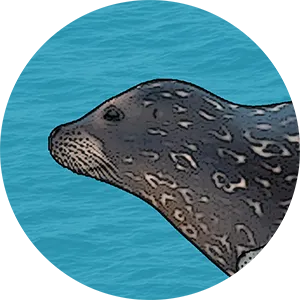
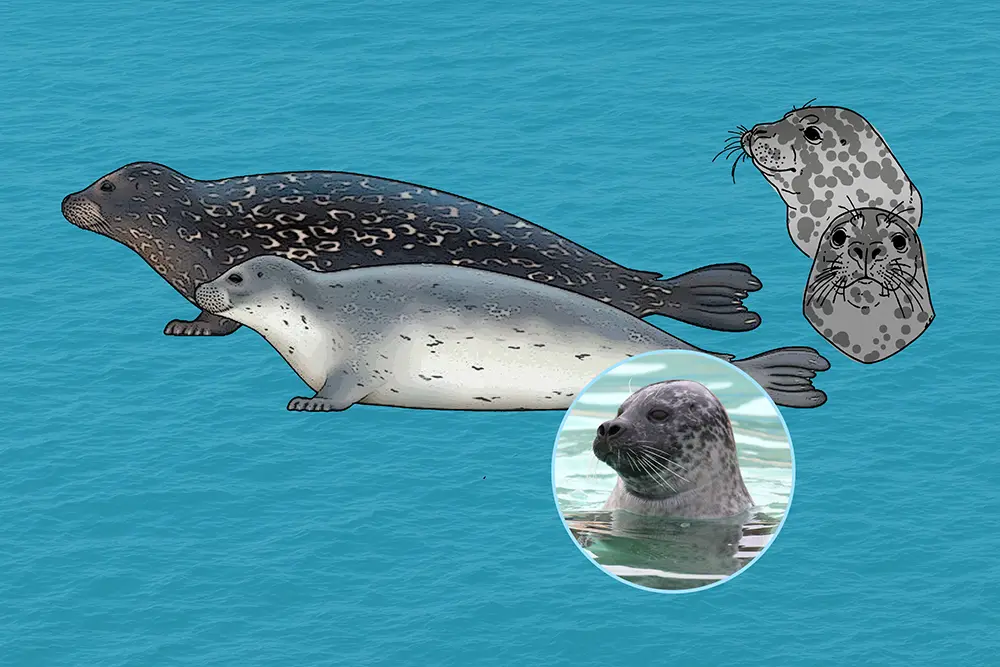
Mammal The common seal, also known as the harbour seal is the smaller of Ireland’s two pinniped species. Males known as bulls will be larger and heavier than the female cows with mature bulls measuring up to 2m in length and weighing up to 150kg. Females grow to 1.8m in body length and generally weigh up to 130kg. They frequently rest on sheltered coastal shores, blending perfectly with rocky shorelines due to their beautifully spotted coats.
- Can stay underwater for 25 mins and dive up to 300 metres deep.
- Shorter concave face with eyes to the front.
- V-shaped nostrils that may appear to meet.
Harbour Porpoise
Irish Name:
An Mhuc Mhara Scientific name:
Phocoena Phocoena Group:
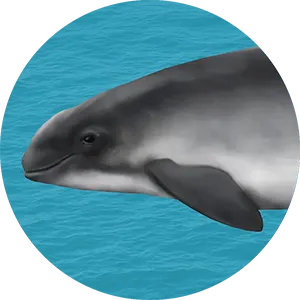
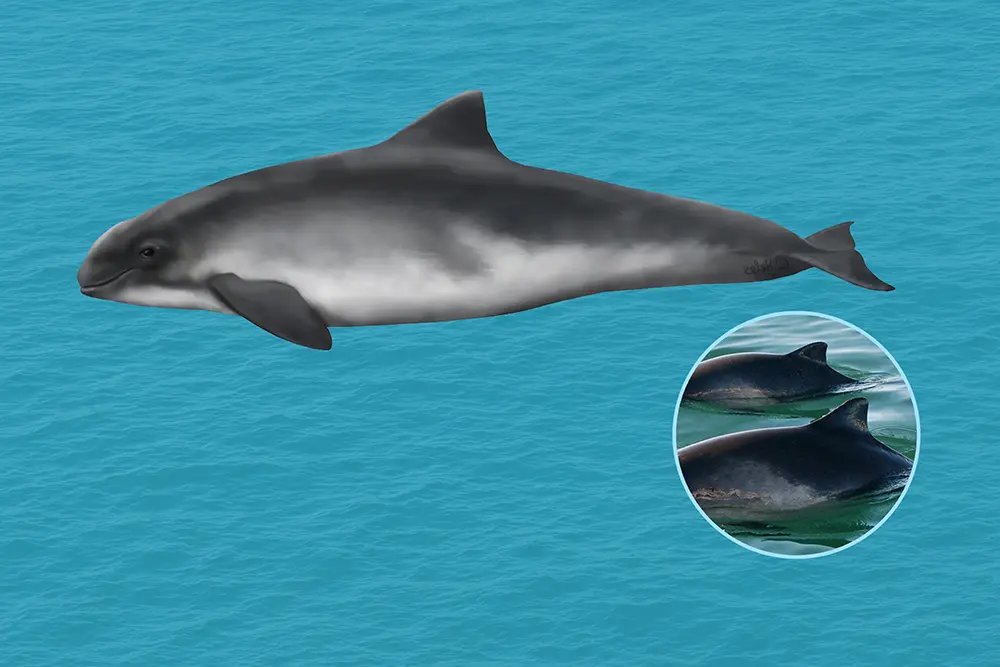
Mammal Harbour porpoises are small, elusive marine mammals known for their coastal habitat and distinct puffing sound when they surface for air. They are one of the smallest cetaceans, characterised by their blunt snout, small triangular dorsal fin and quiet nature. They are skilled hunters, using echolocation to find fish and other prey in their mostly shallow, coastal environments. These shy creatures typically travel in small groups and avoid any heavy boat traffic.
- They have a rounded head with no beak.
- Diet: Herring, sprat, poor cod and whiting.
- Their dorsal fin is small and triangular.
Common Dolphin
Irish Name:
An Deilf Choiteann Scientific name:
Delphinus Delphis Group:
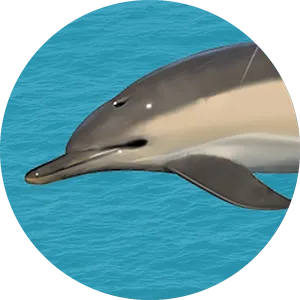
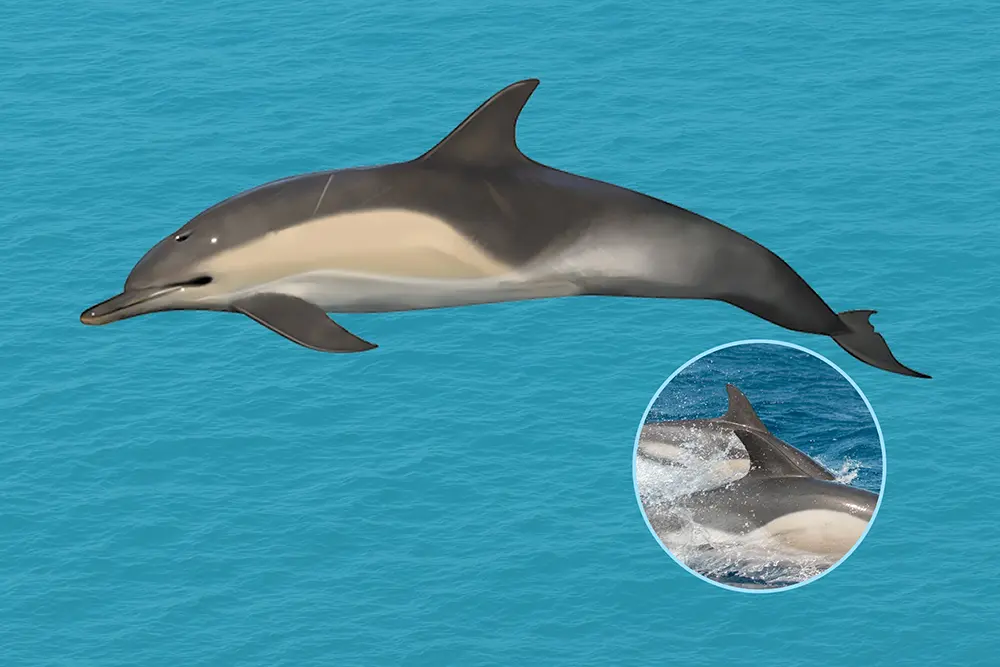
Mammal A small, sleek dolphin with a narrow beak and falcate dorsal fin. Its sides feature a diagnostic “hourglass” pattern, yellow near the head and grey towards the tail. It is dark grey above with a pale underside. Common dolphins are one of the most frequently sighted cetaceans in Irish waters. Keep your eyes peeled on the ferry journey for a chance to spot these playful animals. If we see them, we’ll get you close.
- Breaching regularly takes place along with side slaps.
- Called common dolphins as they have been seen in every ocean.
- These boisterous creatures often ride the bows of large boats.
Howth Head’s Heathland
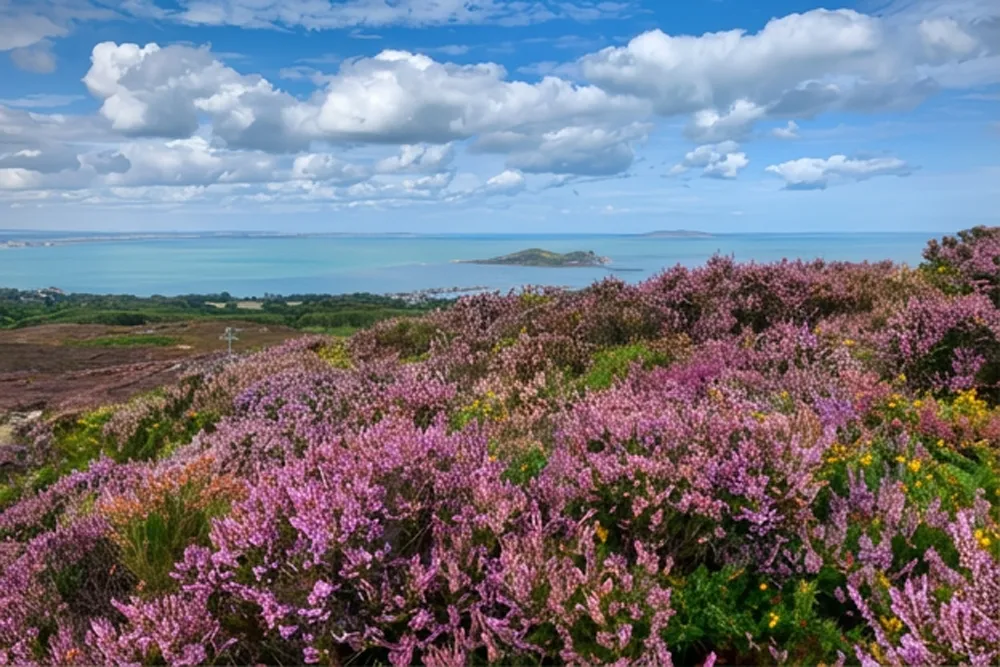
Howth Head’s heathland of heather, gorse and bracken supports a handful of distinctive ground and scrub-nesting birds. Stonechats perch on the gorse tops and nest low in the vegetation, while meadow pipits, the commonest breeders, nest in tussocks and perform parachuting song flights. Linnets favour dense gorse, and a few skylarks still sing over the open grassy patches. Where the heath meets the sea cliffs, peregrines, ravens and fulmars take over the ledges. Ground-nesting birds are easily disturbed between March and August, so sticking to marked trails and keeping dogs on leads helps them breed successfully.
Howth’s rocky shores attract a steady mix of wading birds. Turnstones flip seaweed along the harbour walls, oystercatchers pipe loudly along the tideline, and curlews and redshanks probe the softer ground at low tide. In winter, purple sandpipers pick along the wave-splashed rocks, while the nearby Baldoyle Estuary draws larger flocks of dunlin, godwits and golden plovers.
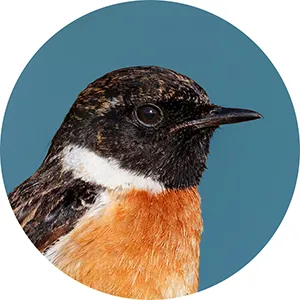
Stonechat
Irish Name:
Caislín cloch Scientific name:
Saxicola rubicola Group:
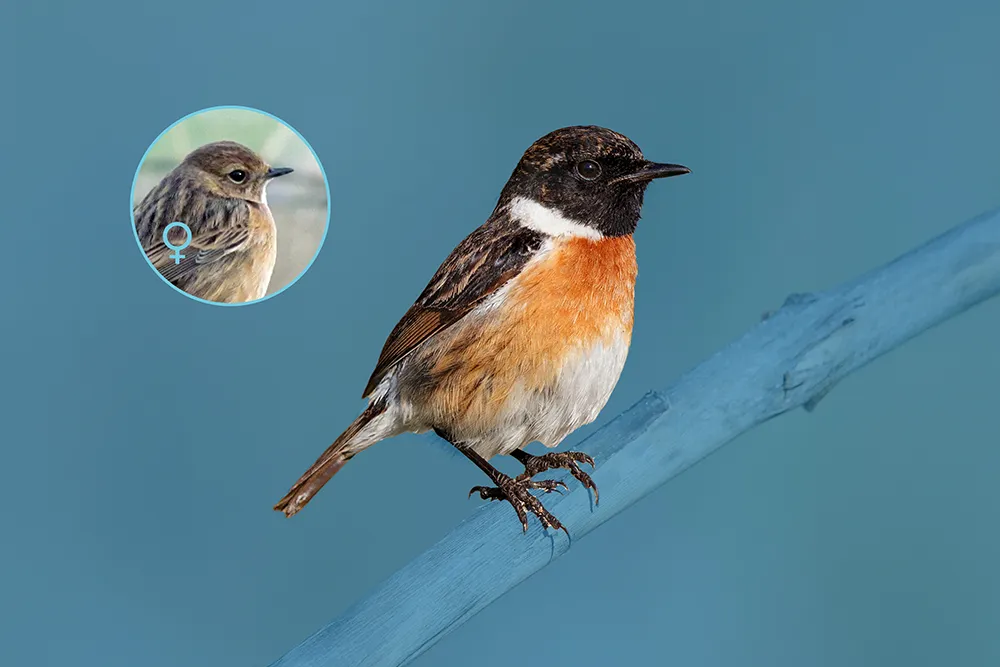
Chats The stonechat is a small, round-bodied bird of Ireland’s gorse-covered hillsides, heathland and coastal scrub. The male has a black head, orange-red breast and white neck patches, while the female is browner and more subdued. Often seen perched on the topmost sprig of a gorse bush, it takes its name from its call, which sounds like two pebbles being tapped together. Stonechats stay in Ireland year-round, nesting low in dense vegetation, and they’re a familiar sight along coastal walks such as Howth Head.
- Named for their call: the sharp “chat-chat” sounds like two pebbles being tapped together.
- Hunt from a perch of gorse or fence post, then drop to snatch insects.
- Fast breeders: they can raise two or three broods a season.
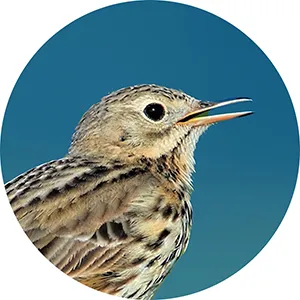
Meadow Pipit
Irish Name:
Riabhóg Mhóna Scientific name:
Anthus pratensis Bird Family:
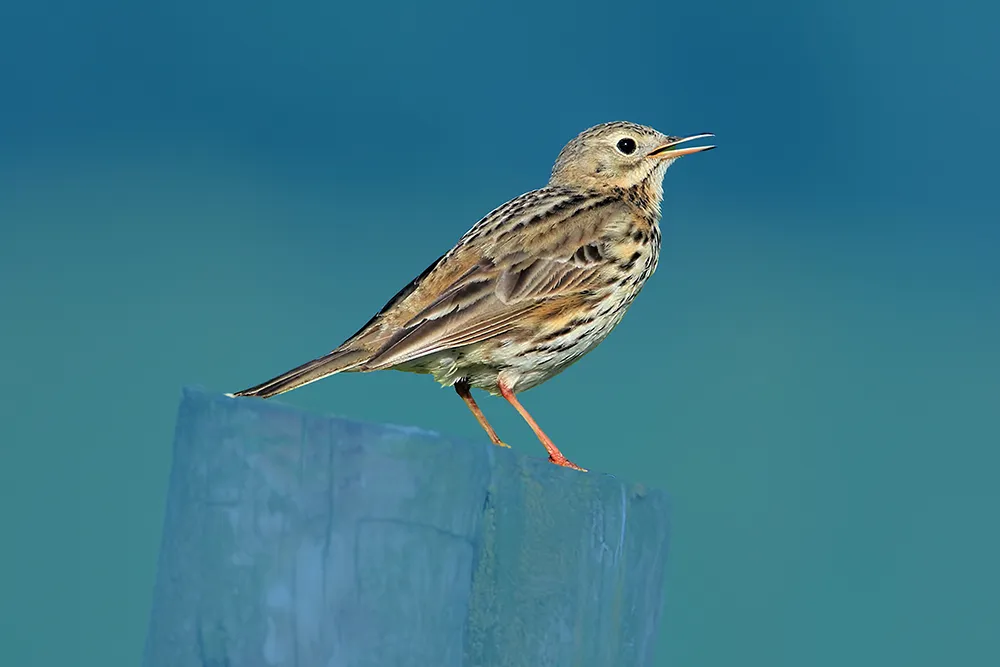
Pipits The meadow pipit is a small, streaky brown bird and one of the most common sights on Howth Head’s heathland and cliff-top grass. Slim and easily overlooked on the ground, it gives itself away in spring with its song flight, rising steeply before parachuting down on stiff wings with a series of thin, rising notes. Meadow pipits nest in tussocks hidden among the heather and grass, so they’re particularly vulnerable to trampling and loose dogs between April and July. Staying on the marked paths helps protect them.
- Feeds on Invertebrates such as craneflies, mayflies and spiders
- They’re a common prey item for hunters such as kestrels
- Meadow pipits are one of the cuckoo’s favourite host species
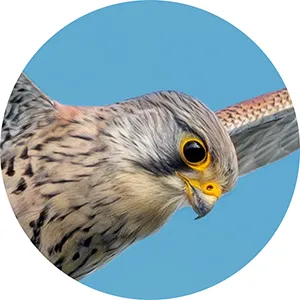
Kestrel
Irish Name:
Pocaire gaoithe Scientific name:
Falco tinnunculus Bird Family:
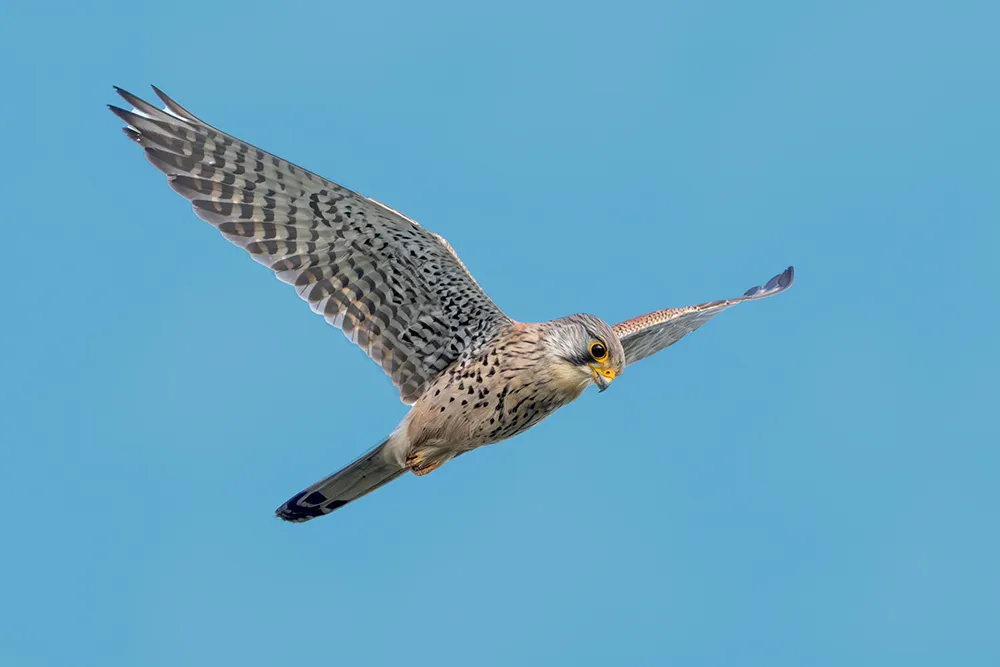
Raptors The common kestrel is a small, slender falcon known for its hovering flight. It hangs almost motionless in the air, tail fanned, scanning the ground for voles, mice and large insects before dropping on its prey. The male has a blue-grey head and tail and a chestnut, black-spotted back, while the female is warmer brown with fine barring. Kestrels nest on cliff ledges, in tree hollows and on buildings, and are a familiar sight over Irish farmland and coastal cliffs, including around Howth Head.
- They see ultraviolet: vole trails contain urine that reflects UV light.
- No nest building: they reuse old crow or magpie nests, tree hollows or cliff edges.
- Hover-hunting: kestrels hold position in the wind with head almost perfectly still.
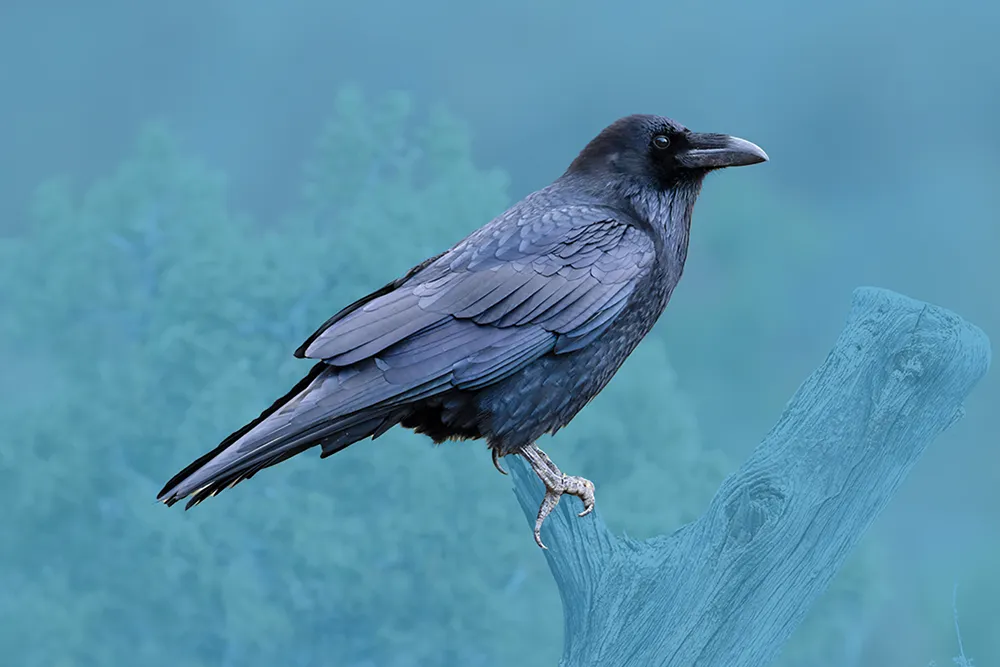
Raven
Irish Name:
Fiach dubh Scientific name:
Corvus corax Bird Family:
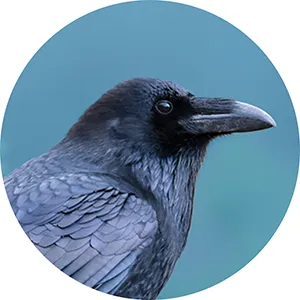
Crows The raven is Ireland’s largest crow and our heaviest songbird, a glossy black bird with a thick bill, shaggy throat feathers and a diamond-shaped tail. It’s easily told from the smaller hooded crow and rook by its deep, croaking “pruk” call and its acrobatic flight, which includes soaring, tumbling and even rolling upside down. Ravens nest early, often building in February or March on sea cliffs, crags and sometimes tall trees, and pairs typically stay together for life. They’re resident all year and are a familiar sight on rugged coasts and uplands, including the cliffs around Howth Head. Ravens feature widely in Irish folklore, where they are linked with war, prophecy and the Morrígan.
- Ravens rank among the most intelligent birds, solving puzzles, using tools in experiments
- Mimics: they can imitate other birds, animal calls and even human sounds.
- Folklore: in Ireland they’re linked with the Morrígan, the goddess of war and fate.